If you’ve killed more houseplants than you’ve kept alive, self-watering systems might be the solution you’ve been looking for. These clever setups bridge the gap between a plant’s thirst and your unpredictable watering schedule, delivering moisture on demand without overwatering. Whether you’re a seasoned plant parent who travels frequently or a beginner trying to build confidence, self-watering indoor plants offer a reliable way to keep greenery thriving. This guide walks you through how these systems actually work, which plants excel with them, and how to set them up correctly so you’re not just buying a gadget, you’re genuinely improving your plants’ survival rate.
Table of Contents
ToggleKey Takeaways
- Self-watering indoor plants use a wicking mechanism and reservoir system to deliver moisture gradually, preventing overwatering and consistently mimicking how roots naturally absorb water.
- The best self-watering indoor plants are tropical and foliage varieties like pothos, philodendrons, peace lilies, and aroids that thrive in consistently moist conditions rather than succulents.
- Choose passive wicking systems ($15-$60) for affordability and simplicity, float-valve systems ($30-$100) for precision with larger plants, and avoid gravity-fed systems as unreliable long-term solutions.
- Proper setup requires fresh potting soil, priming the wick with moist soil, and an initial top watering to activate the system before relying on reservoir refills every 1-3 weeks.
- The biggest mistake is assuming self-watering systems require no monitoring—you must check water levels weekly, refill regularly, and replace water every 4-6 weeks to prevent mineral buildup and mold.
- Self-watering indoor plants fail when paired with succulents or low-moisture plants, or when neglected due to assumptions that the system eliminates all plant-care responsibility.
What Are Self-Watering Plants and How Do They Work?
Self-watering indoor plants don’t water themselves, the name’s a bit of marketing speak. What actually happens is that a self-watering system uses a reservoir, wicking mechanism, and a soil sensor to deliver water gradually as the soil dries. Here’s the basic mechanic: a tube or fabric wick pulls water from a reservoir up into the soil, releasing it only when the soil moisture drops below a certain threshold. As the plant consumes water and the soil dries out, capillary action draws more water upward, maintaining consistent moisture.
The most common setup involves a double-pot system, an outer container holds the water reservoir, and the inner pot sits slightly elevated, with a wick running down into the water. Some planters use a single-chamber design with a built-in float valve that prevents overwatering. Others rely on a passive wicking system without moving parts. The key difference between systems is how reliably they maintain that sweet spot: moist but not waterlogged.
Why this matters: overwatering kills more houseplants than underwatering, especially in low-light indoor conditions where evaporation is slow and roots can’t dry out quickly. Self-watering planters reduce guesswork by mimicking how plant roots naturally absorb moisture from soil, slowly and continuously rather than in feast-or-famine cycles. That said, these systems aren’t a complete set-it-and-forget-it solution. You still need to refill the reservoir, monitor soil health, and choose plants that tolerate consistent moisture.
Best Self-Watering Indoor Plant Varieties for Your Home
Not every plant thrives with consistent moisture, so plant selection matters. Succulents, for instance, despise wet feet and will rot in a self-watering system. The best candidates are plants that come from naturally moist habitats or tolerate humid, evenly moist soil.
Tropical and Foliage Plants
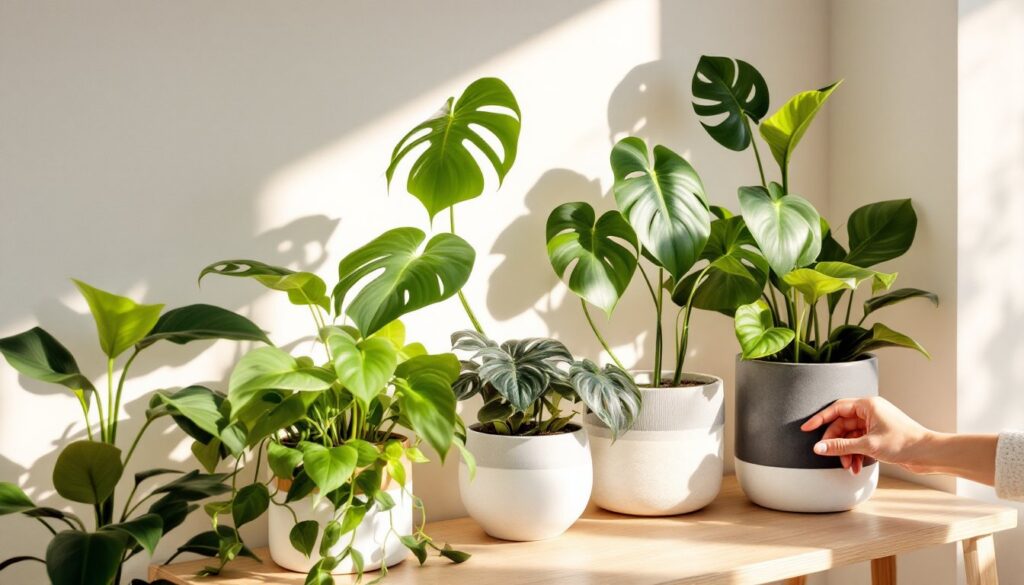
Tropical plants adapted to rainforest understories are ideal self-watering candidates. Pothos (Devil’s Ivy) tops the list, it’s nearly indestructible, tolerates low light, and actually prefers consistent moisture over dry spells. Philodendrons, including the popular heart-leaf variety, follow the same preference. Spider plants adapt well to self-watering systems and produce runners of baby plantlets with minimal fussing. Peace lilies are another winner: they’ll droop dramatically when thirsty (which won’t happen with a self-watering setup), and they thrive on steady moisture. Snake plants tolerate the system but grow slowly and aren’t the fastest-growing option, they’re more forgiving in standard pots. Monstera deliciosa and other aroids prefer self-watering over sporadic watering cycles, and their large leaves reward consistent care with lush growth.
When stocking your space with foliage, remember that plants adapting to the humidity and stable moisture of self-watering systems often develop larger, more vibrant leaves than those in typical dry indoor conditions.
Flowering and Decorative Options
Anthuriums (flamingo flowers) produce more blooms when soil stays consistently moist, making them excellent for self-watering planters. African violets are another classic choice, though they prefer water from below rather than on their fuzzy leaves, self-watering systems solve this by keeping moisture at the root level. Begonias and impatiens, both shade-tolerant flowering plants, thrive on consistent moisture. If you’re aiming for a showier display, calatheas and maranta (prayer plants) reward steady watering with dramatic, patterned foliage and occasional blooms. Ferns, too, are happiest in self-watering setups: they’re humidity and moisture lovers that struggle in typical dry indoor air.
For a cohesive display, consider pairing moisture-loving plants in the same self-watering planter to avoid the common mistake of mixing plants with different water needs.
Choosing the Right Self-Watering System
Self-watering planters come in three basic flavors: passive wicking systems, float-valve reservoirs, and gravity-fed bottle systems. Each has trade-offs in complexity, aesthetics, and reliability.
Passive wicking planters use a fabric or rope wick running from a reservoir into the soil. They’re the most common and affordable option, typically ranging from $15 to $60 depending on material and size. These work reliably for small to medium plants but can underperform if the wick dries out or soil compacts around it, blocking capillary action. The upside: no moving parts, no fiddling.
Float-valve self-watering systems use a mechanical float that rises and falls with the water level, triggering a valve to open or close. They’re more precise than wicking and ideal for larger plants or rooms where you want to minimize checking the reservoir. Expect to spend $30 to $100 depending on brand and pot diameter. The downside is added complexity, if the valve sticks or the float jams, the system fails. These also require more careful initial setup to ensure the valve sits at the correct height.
Gravity-fed systems (like self-watering globes or drip-bottle setups) are the cheapest at $5 to $15 but the least reliable. They’re prone to clogging, don’t regulate moisture well, and often deliver too much water at once. They’re fine for short absences (a week or two) but not a permanent solution.
The stylish woven or concrete self-watering pots now available on the market merge function with decor. Look for pots with clearly marked water-level indicators and easily accessible reservoirs, you’ll be refilling them every 1-4 weeks depending on plant size, season, and indoor humidity. Avoid pots with hidden reservoirs that require you to tip or disassemble them to refill: that’s a recipe for skipping maintenance and defeating the system’s purpose. Material matters too: terracotta-look ceramic or concrete are popular, but true porous terracotta actually works against self-watering because water evaporates through the pot walls. Glazed ceramic, plastic, or composite materials retain moisture better in a closed-system design.
When browsing, 10 stylish self-watering pots and planters reviewed by design-focused gardeners can give you a sense of what’s available in the market. The Spruce’s comprehensive resource also covers self-watering planter reviews and comparisons if you want expert recommendations.
Setting Up and Maintaining Self-Watering Planters
Setup is straightforward but requires attention to a few critical steps. Start with fresh, quality potting soil, not garden soil, which is too dense and doesn’t wick well. Use a general-purpose indoor potting mix: it drains well enough to prevent complete waterlogging yet retains enough moisture to work with wicking.
Fill the reservoir chamber first, then add moist potting soil to the planting chamber. This primes the wick and ensures good contact between soil and the wicking material. Position your plant, backfill with soil, and water from the top once to settle everything and activate the wicking. After that, refill the reservoir as needed, typically every 1-3 weeks, though this varies by plant size, season, and humidity.
Monitoring is where most people slip up. Check the water level weekly by lifting the pot or checking the level indicator. Don’t assume it’s full: some wicks become blocked or slow over time. If the soil feels bone-dry, your wick may need replacing or the soil may have compacted. Mix in a small amount of perlite or orchid bark when potting to improve aeration and wick performance.
During dormant winter months, many tropical plants slow growth and need less water, so you might refill the reservoir only every 2-4 weeks. In growing season (spring and summer), refilling every 1-2 weeks is normal. Plant pots serve as stylish homes for roots, so ensure your chosen planter matches both your aesthetic and functional needs.
Clean the reservoir and replace water every 4-6 weeks to prevent mineral buildup and mold. If you notice algae or slime, empty the reservoir, rinse thoroughly, and refill with fresh water. A tiny bit of mold or algae on the wick itself is usually harmless and won’t hurt the plant, but excess buildup can clog the system.
Common Mistakes to Avoid with Self-Watering Plants
The biggest trap is thinking a self-watering system eliminates responsibility. Many owners fill the reservoir once and assume they’re done for months, they’re not. If you forget to refill the reservoir, the wick can’t draw water, and your plant dries out exactly like it would in a standard pot. Check the water level regularly, especially in summer or in warm, dry homes.
Another frequent error is choosing the wrong plant. Cacti, succulents, snake plants, and zz plants don’t belong in self-watering systems: they prefer drier conditions and will rot if kept perpetually moist. Conversely, putting a moisture-loving plant in a traditional pot and neglecting it defeats the purpose of investing in a self-watering system.
Overfilling the reservoir is also problematic. If water sits above the soil line or soil is constantly saturated, roots become oxygen-starved and rot. The soil should be moist, not sopping. If the water level doesn’t drop for weeks, your plant may not be drinking because it’s not actively growing, the humidity is exceptionally high, or temperatures are cool. In those cases, partially empty the reservoir to avoid stagnation.
Skipping the initial top watering is another mistake. New soil needs that first watering from above to settle and activate the wick. Without it, the wick may not make good contact with the soil, and the system won’t function properly.
Finally, don’t ignore pests or disease because the plant looks hydrated. Consistent moisture can attract fungus gnats or create conditions for root rot if drainage is poor. Understanding indoor plant diseases helps you catch problems early. If you notice yellowing leaves, soft stems, or a musty smell, the issue isn’t usually the self-watering system, it’s often the plant itself outgrowing the pot or needing fresh soil after a year or two. Replace the soil and sanitize the planter every 12-18 months, even if the plant looks fine.