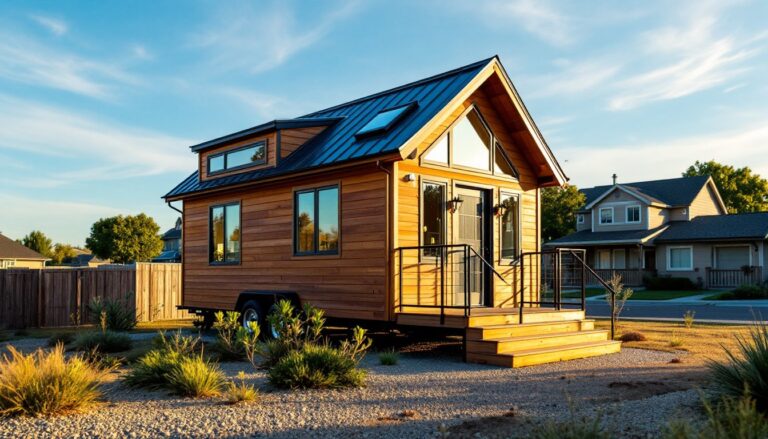
Tiny homes are no longer a niche experiment, they’re a practical solution for downsizing, sustainability, and financial freedom. But here’s the catch: living small doesn’t mean sacrificing the comforts that make a home feel welcoming. A porch changes that equation. Whether it’s a modest 4-by-8 landing or an expansive wraparound, a porch extends your living space, creates a transition zone between indoors and outdoors, and adds genuine curb appeal. For tiny house owners, a well-designed porch isn’t a luxury, it’s a functional necessity that amplifies your square footage without adding to your mortgage or maintenance headaches. This guide walks you through planning, designing, and building a porch that actually works with your tiny footprint.
Table of Contents
ToggleKey Takeaways
- A tiny house with porch extends livable space by 64+ square feet without expanding roof or foundation costs, transforming small footprints into functional retreats.
- Orientation and climate are critical: south-facing porches suit cool climates, while north-facing options provide shade in hot regions; always verify local frost line requirements for proper foundation depth.
- Composite decking and metal roofs offer long-term value despite higher upfront costs, while pressure-treated lumber framing and simple rectangular designs minimize expenses and maintenance challenges.
- Strategic furnishing with one focal point—a swing or rocking chair—and lightweight, multifunctional pieces maximizes usability without creating visual clutter on small porch spaces.
- A basic 10-by-8 porch costs $4,000–$8,000; DIY carpentry combined with professional roofing installation offers the best balance of cost savings and safety compliance.
Understanding The Tiny House With Porch Appeal
A porch on a tiny house solves a real problem: it stretches your livable space without expanding your roof or foundation costs. When you’re working with under 1,000 square feet indoors, even 64 square feet of covered porch space, a standard 8-by-8 deck, can feel transformative. It becomes your outdoor kitchen, your morning coffee nook, your guest waiting area, and your seasonal buffer zone.
The appeal also runs deeper than pragmatism. A porch signals “home” in a way that matters psychologically. It’s where neighbors stop to chat, where you can retreat without leaving your property, and where small design choices (a good rocking chair, thoughtful railing, adequate shade) create disproportionate comfort gains.
Beyond aesthetics, porches address the isolation many tiny house owners fear. With proper design, a porch becomes a semi-outdoor living room that extends your usable space year-round, critical in climates with long winters or intense summers. This tiny house showcases, turning a small footprint into a livable retreat.
Structurally, porches are also forgiving. Unlike adding a full room, a porch requires simpler framing, fewer electrical runs, and no interior HVAC consideration. Permit requirements vary by jurisdiction, but a basic platform porch rarely triggers the delays or costs of major structural work.
Design Considerations For Tiny House Porches
Before you sketch or order lumber, nail down three things: orientation, climate, and weight load.
Orientation matters because sun exposure drives comfort. A south-facing porch gets morning warmth and afternoon heat in summer, great for cool climates, brutal in hot ones. North-facing porches stay cool and shaded but feel dark and damp in humid regions. East-facing captures gentle morning sun: west-facing delivers hot afternoon blaze. Think about where you’ll spend time and what season you want to optimize for.
Climate shapes your material and roofing choices. In snow country, your porch roof needs slope and structural capacity to shed loads safely, most codes require at least a 4-in-12 pitch and posts rated for regional snow load. In wet climates, drainage becomes critical: a poorly sloped deck or porch traps water and rots out joists in three seasons. In arid climates, you might prioritize shade and wind resistance over drainage.
Weight and foundation deserve serious attention. A 12-by-16 pressure-treated deck costs next to nothing if your soil is stable: it’s a nightmare if you’re on rocky soil or clay. Frost heave (the upward movement of soil from frozen water) can lift an inadequately founded porch 2–3 inches over a winter, cracking rim board and railings. In cold climates (USDA zones 4 and colder), footings must extend below the frost line, typically 36–48 inches deep, though local codes define this.
Materials And Construction Options
Your porch frame is usually pressure-treated lumber, typically 2×8 or 2×10 rim joists and 2×6 or 2×8 floor joists. Don’t cheap out here: pressure-treated lumber rated for ground contact (not just aboveground) resists rot far longer. Untreated lumber on a porch becomes spongy and unsafe within five years in most climates.
Decking options range from pressure-treated pine (budget-friendly, requires staining every 2–3 years) to composite boards like Trex or Fiberon (higher upfront cost, minimal maintenance) to tropical hardwoods like IPE (expensive, dense, long-lasting but difficult to work with hand tools). For a tiny house porch, composite often wins: it doesn’t splinter, holds stain or paint better, and won’t need re-staining while you’re still living there.
For roofing, a standing seam metal roof or asphalt shingles matching your house are typical. Metal costs more upfront but reflects heat and sheds snow cleanly, valuable in snowy or hot climates. Asphalt shingles blend seamlessly with existing roofs and are cheaper but need maintenance every 15–20 years.
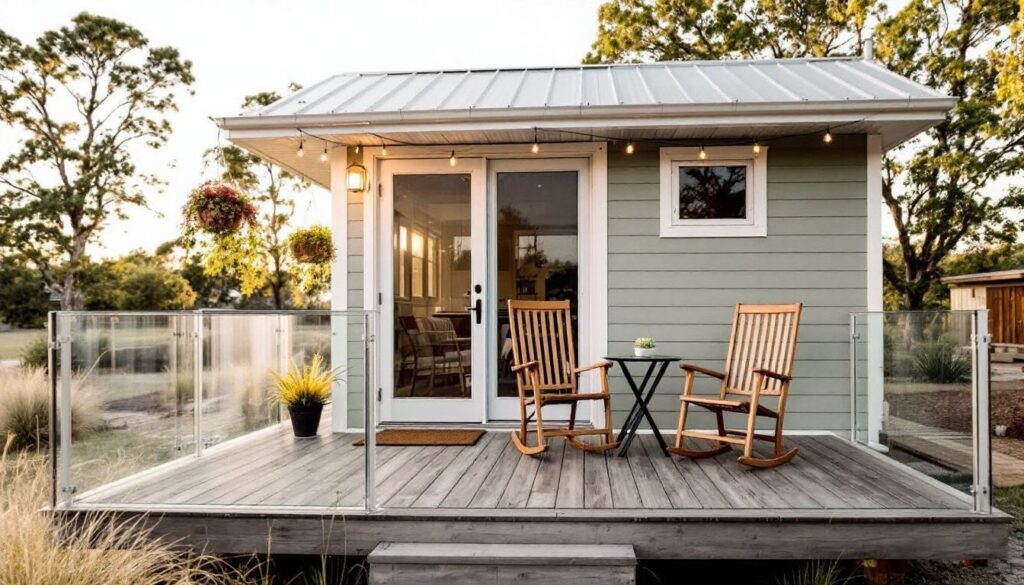
Railing requirements vary by code but generally demand balusters (vertical spindles) no more than 4 inches apart, a test ball shouldn’t pass through. For a tiny porch, consider glass panels instead of traditional balusters: they preserve sightlines, make the space feel larger, and require less maintenance than painted wood. Wire cable railings also work and look modern, though they’re pricier.
Space-Maximizing Porch Layouts
With limited square footage, every dimension counts. A minimum porch depth of 6 feet lets you place a chair and a small table without feeling cramped: 8 feet is comfortable. Length depends on your house footprint. A 12-foot-wide tiny house can support a 10-to-12-foot-long porch without overwhelming the facade.
The shape matters too. A simple rectangular porch is easiest to frame and cheapest to build. An L-shaped porch wraps a corner, creating a sense of enclosure and extra usable corners for planters or seating. A wraparound porch (technically an L or U) maximizes perimeter but adds complexity and expense: reserve it for sites where it genuinely serves multiple entry points or maximizes views.
Think vertically. A tall railing blocks sightlines and makes a small porch feel claustrophobic: lower railings (42 inches to the top of the railing, as required by code) or transparent materials (glass, cable) help. Overhead shade, a pergola, shade sail, or roof overhang, adds comfort without eating floor space. A pergola running the length of the porch is cheaper than a full roof and provides dappled shade in summer while letting winter sun through.
For circulation, avoid dead-end layouts. A porch where you can’t move between seating areas or entry doors feels cramped fast. Plan for at least a 3-foot clear path and, if possible, a way to move around furniture without obstruction. If your porch connects to a side yard, consider how traffic flows: a porch shouldn’t force visitors to squeeze past a rocking chair.
Decorating And Furnishing Your Tiny Porch
Furnishing a tiny porch requires restraint and intention. Small space living ideas emphasize multifunctional pieces and strategic decor, principles that apply equally to porches. A 64-square-foot porch isn’t a gallery: it’s a functional extension of your living space.
Start with a focal point: a swing, rocking chair, or bench that anchors the space and signals the porch’s purpose. Choose one quality piece rather than cramming in three mediocre ones. A solid wood or metal swing takes up minimal floor space but gives the porch definition and invites lingering.
Forget large sectionals or dining tables unless your porch is genuinely large. Instead, use lightweight folding chairs, a small bistro table, or a narrow console table that doubles as a plant shelf or place for guests to set down drinks. Stools and ottomans work well, they tuck under a bench or fold when not needed.
Color and finishes should complement your tiny house. If your home has a modern aesthetic, keep porch decor minimal, solid-colored cushions, sleek metal furniture, perhaps a statement planter. If your house leans rustic, weathered wood and warm textiles work. The key is visual cohesion: a porch that clashes with the house feels like an afterthought.
Plants add life without bulk. A few large potted perennials or a small hanging herb garden is better than a jungle of small pots. Vertical gardening, a wall planter, trellis, or hanging baskets, maximizes greenery without eating floor space. Remember that potted plants in hot climates need daily watering: choose drought-tolerant varieties or accept the maintenance cost.
Budget-Friendly Porch Upgrade Ideas
A basic 10-by-8 porch with pressure-treated decking, a simple roof, and code-compliant railings runs $4,000–$8,000 in most regions, depending on site conditions and local labor costs. But you can trim costs with smart choices.
Decking: Pressure-treated lumber ($1.50–$2.50 per board foot) beats composite for initial budget. Stain it every few years, and you’ll get 20+ years of life for a fraction of the cost. If you’re handy, install it yourself: labor often runs $15–$25 per square foot installed.
Roofing: Metal roof panels cost more upfront ($2,000–$4,000 for a small porch) but last 40+ years: asphalt shingles cost $800–$1,500 but need replacement sooner. Do the math for your climate. In snow country, metal’s durability and shedding properties justify the expense.
Railings: Standard pressure-treated balusters and rails are cheapest ($5–$8 per linear foot material). Paint or stain them yourself. Skip metal balusters and glass panels unless budget allows: they’re prettier but unnecessary for a tiny porch.
DIY vs. contractor: If you’re comfortable framing and installing deck boards, handle the carpentry yourself and hire a contractor only for the roof and electrical (if your porch includes lights or outlets). For roofing and permitting headaches, hiring a licensed carpenter often costs less than mistakes.
Upgrades that pay off: A roof overhang that extends 2–3 feet beyond the railing protects the deck and provides genuine shade, cheap but high-impact. Adding a ceiling (beadboard or simple drywall) creates a finished feel for $300–$600. Outdoor string lights or a fixture add ambiance for under $100.
Seasonal staging: Before investing in permanent porch furniture, rent or borrow pieces for a season. You’ll learn what works, what size feels right, and what you’ll actually use. Modern architecture and sustainable design principles also apply to porch planning: simple, well-proportioned spaces often cost less than fussy ones.
Conclusion
A porch transforms a tiny house from a curiosity into a genuine home. It’s not cosmetic, it’s the difference between a 600-square-foot footprint feeling tight and feeling generous. Focusing to orientation, climate, foundation, and materials, you’ll build a porch that lasts decades and earns its square footage. Start with the basics, solid framing, good drainage, and a single strong focal point, and layer on comfort and style from there. Your tiny house will feel bigger, your outdoor living will expand, and your neighbors will finally understand why you went small.