Hard water affects about 85% of U.S. homes, leaving mineral deposits on fixtures, reducing soap effectiveness, and wearing down appliances faster than they should. A water softener removes calcium and magnesium ions that cause these headaches, literally and figuratively. But before you rush into a purchase, you need to understand what a water softener for house cost actually runs and whether the investment makes sense for your situation. This guide breaks down upfront expenses, installation fees, and long-term operating costs so you can make an well-informed choice without surprises down the road.
Table of Contents
ToggleKey Takeaways
- A water softener for house cost typically runs $1,500–$3,000 installed, with annual operating expenses of $100–$200 for salt-based systems, making it a reasonable investment for homeowners staying put 7+ years.
- Hard water affects 85% of U.S. homes and can shorten water heater life by 25–40%, so testing your water hardness (15+ GPG) before purchasing helps determine if a softener is worth the investment.
- Salt-based softeners ($500–$2,500 unit cost) are most common and effective, while salt-free systems ($800–$2,000) avoid brine discharge and work well in conservation-restricted areas, though they’re less effective on very hard water.
- Professional installation costs $150–$800 depending on plumbing complexity, and skipping required permits can cause issues when selling your home or filing insurance claims.
- Over 10 years, total costs for a salt-based system reach $2,700–$5,500 when combining installation, salt, electricity, and maintenance—offsetting expenses through appliance longevity and energy savings.
- Get 2–3 contractor quotes from reputable platforms and ask about warranties on tanks and valves before committing, as water softener performance varies by local water conditions and system type.
What Is a Water Softener and Why It Matters
A water softener is a tank-based system that uses an ion exchange process to swap hard minerals for sodium or potassium ions. When hard water passes through resin beads inside the tank, the beads grab onto calcium and magnesium and release sodium in their place, softening the water before it flows to your taps and appliances.
Hard water creates real problems: it shortens water heater life by 25–40%, reduces dishwasher and washing machine efficiency, clogs plumbing fixtures with mineral buildup (called scale), and strips your skin and hair of moisture. Soft water reverses these issues. Your soap lathers better, your skin feels less tight after a shower, and your water heater doesn’t have to work as hard.
There’s a catch, though. Water softeners require ongoing maintenance, salt refills, resin cleaning cycles, and periodic inspections. If you have low to moderate hard water (7–10 GPG), you might skip softening for cosmetic reasons. But at 15 GPG or higher, a softener usually pays for itself in appliance longevity and energy savings within 5–7 years. Get your water tested before buying anything: your local health department or a water company can provide results for free or a small fee.
Average Water Softener Costs by Type
Salt-Based Systems
Salt-based water softeners are the most common type and typically cost between $500 and $2,500 for the unit alone. The price depends on grain capacity, a measure of how many hardness minerals the resin can remove before it needs to regenerate.
A small household (2–3 people) needs roughly 24,000–32,000 grain capacity: a larger family (4–6 people) typically requires 32,000–64,000 grain capacity. Budget $600–$1,000 for a mid-range 32,000-grain unit from reputable brands. Premium models with smart controls and tighter filtration can run $1,500–$2,500. These systems regenerate automatically, flushing resin with salt and wastewater roughly every 3–5 days for a typical household.
Be aware: salt-based softeners discharge brine wastewater into your drain system, which works fine in most homes but may violate local water conservation ordinances in drought-prone regions like California. Check your municipal code before installing. Also, homes on septic systems should consult their installer, salt can harm beneficial bacteria that break down waste.
Salt-Free Systems
Salt-free conditioners and template-assisted crystallization (TAC) units cost between $800 and $2,000 for the equipment. Unlike salt-based softeners, they don’t remove minerals: they change their structure so they don’t stick to pipes or appliances. Results are less dramatic, you’ll still see some scale over time, but they avoid the brine discharge issue and don’t require salt refills.
Salt-free systems are ideal for homes with water conservation rules, septic systems, or households concerned about sodium in drinking water. They typically don’t require electricity and last 5–10 years before cartridge replacement. The tradeoff? They’re less effective on very hard water (above 20 GPG) and won’t give you the “soft” feel that salt-based systems deliver. Installation costs are usually comparable to salt-based units, so total upfront expense lands in a similar range.
Installation Expenses You Need to Know
Installation is where costs get real. Professional water softener installation runs $150 to $800, depending on plumbing complexity and where your water main enters your home.
A straightforward installation, where the water line is easily accessible and you don’t need major plumbing work, costs closer to $150–$300. But if your water main is buried deep, your plumbing layout is convoluted, or you need a drain line run to a laundry area, expect $400–$800. Some installers charge a flat rate: others bill hourly at $75–$150 per hour plus materials.
What’s included: Most installers handle valve connections, bypass installation, and water line hookups. They’ll also set up the drain line so brine discharge goes to your main drain, sump pump, or outdoor grade. Some companies include a service call after 30 days to check pressure and flow rate.
Permits and inspections vary by municipality. Some areas require a plumbing permit (typically $50–$200) before installation. Your installer should know local requirements: ask upfront. Skipping a required permit can cause problems if you sell your home or file an insurance claim.
You can DIY installation if you’re comfortable with basic plumbing, cutting PVC, soldering copper (or using compression fittings), and routing drain lines. Handypeople often save $200–$500 this way, but you’ll need a few specialty tools and patience. If your home uses a water meter, the installation becomes more fiddly. When in doubt, hire it out: a botched connection can leak into your foundation or walls.
Long-Term Operating Costs
Installation is one-time: operating costs recur. For a salt-based system, budget $100–$200 annually for salt alone.
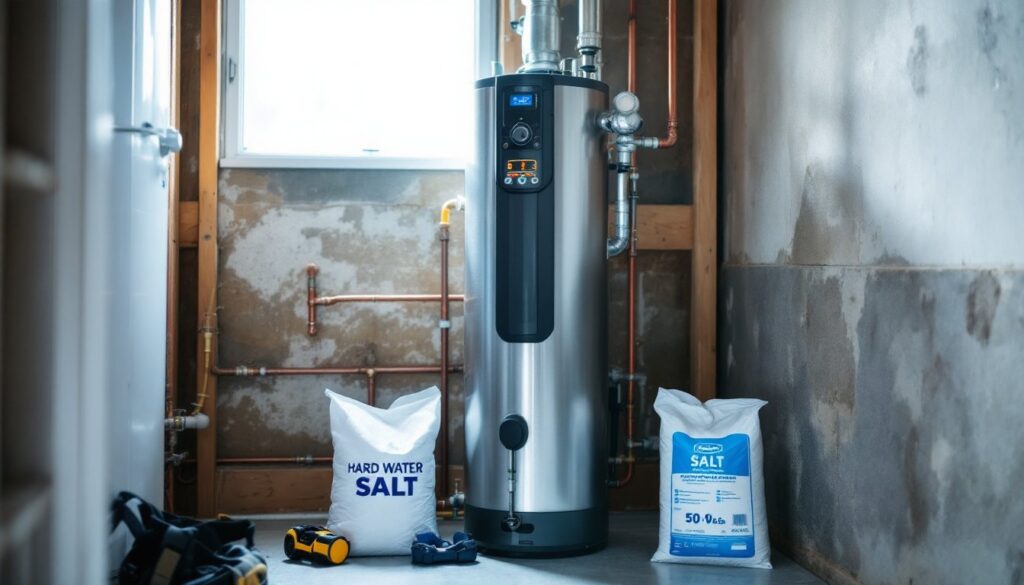
A typical household refills 40–60 pounds of salt every 2–3 months. Bulk bags (50 lbs) cost $5–$8 each at hardware stores or online, or $1–$2 per bag if you buy a year’s supply in advance. Some water softener companies offer auto-delivery subscriptions for $120–$180 per year, which is convenient but pricier. If your system is tank-fed, delivery eliminates hauling heavy bags to your basement.
Add in electricity costs if your unit has a digital timer or controls: roughly $50–$100 per year. Salt-free systems skip salt expenses but may need a cartridge replacement every 5–10 years ($300–$600 as a major maintenance item spread across years). Both types benefit from annual service inspections ($100–$150) to check resin condition, valve seals, and water pressure.
Over 10 years, a salt-based system’s total operating cost is roughly $1,200–$2,500 (salt + electricity + occasional service). Add that to your $1,500–$3,000 installed cost, and you’re looking at $2,700–$5,500 total. Contractor databases and cost estimators can help you get localized quotes. For detailed regional data on installation trends, check water softener installation cost breakdowns that account for 2026 market changes.
One more reality check: if you’re renting or planning to move within 3–5 years, a water softener is a tough sell unless you can take it with you. Most buyers won’t pay extra for a softener: they’ll view it as an old appliance taking up basement space. Homeowners staying put for 7+ years usually recoup the investment through lower water heater and appliance replacement costs.
Conclusion
A water softener typically costs $1,500–$3,000 installed for most households, with operating costs of $100–$200 yearly. Whether it’s worth it depends on your water hardness, local codes, and how long you plan to stay. Test your water, get 2–3 contractor quotes using home improvement platforms, and ask about warranties on tanks and valves before deciding. Hard water is fixable, just do it with clear eyes on the actual cost.