If you’ve ever noticed dust settling on surfaces within hours of cleaning, or dealt with persistent odors that seem to linger no matter what you do, you know indoor air quality can be a real problem. A whole house air purifier with UV light works quietly behind the scenes, typically integrated into your HVAC system, to tackle contaminants at the source rather than waiting for them to accumulate. Unlike portable units, a whole house system treats the air throughout your entire home as it circulates through your ducts, catching particles, neutralizing biological growth, and using ultraviolet light to eliminate pathogens. This guide walks you through how these systems work, what to expect during installation, and whether one makes sense for your home.
Table of Contents
ToggleKey Takeaways
- A whole house air purifier with UV light integrates into your HVAC system to treat air throughout your entire home simultaneously, unlike portable units that work room by room.
- UV-C light at 254 nanometers destroys bacteria, viruses, and mold DNA without introducing chemicals, but works most effectively when paired with MERV 13+ mechanical filtration and activated carbon filters.
- Installation requires a licensed HVAC contractor and typically costs $1,200–$2,500, with ongoing maintenance including filter replacements every 3–6 months and annual UV bulb replacements.
- A whole house UV air purifier is ideal for homes with allergies, asthma, multiple pets, humidity-related mold issues, or when you want to extend HVAC equipment lifespan.
- Proper system sizing based on your furnace’s CFM (cubic feet per minute) capacity is critical—undersized systems provide incomplete treatment while oversized systems can strain your blower.
- While effective at air purification, a UV system works best alongside separate solutions for ventilation and humidity control to achieve truly healthy indoor air quality.
What Is a Whole House Air Purifier With UV Light?
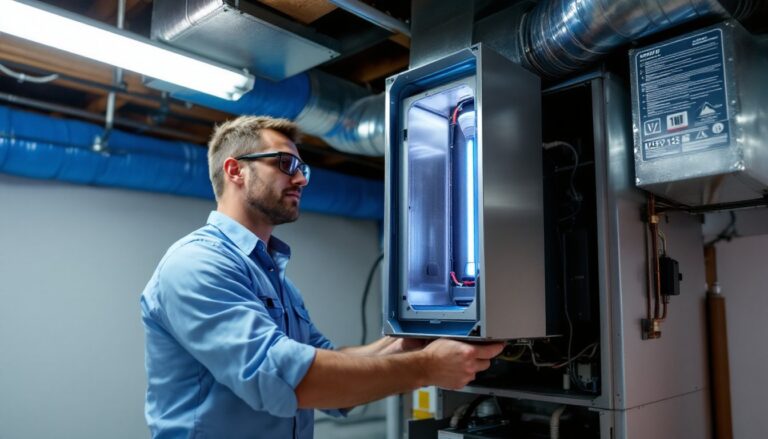
A whole house air purifier with UV light is a system installed directly into your home’s HVAC ducting, usually near the furnace or air handler. Unlike a portable air purifier that cleans one room at a time, this equipment filters air as it moves through your heating and cooling system, meaning every time your system runs, the entire home’s air passes through the purification stages.
The system typically combines multiple layers of filtration. The first stage uses a mechanical filter (often a MERV 13 or higher-rated filter) to catch dust, pet dander, pollen, and other particulates. Behind that sits the UV light chamber, where ultraviolet-C (UVC) radiation destroys the DNA of bacteria, viruses, and mold spores as air passes through. Some units add an activated carbon filter as a final stage to neutralize odors and chemical vapors.
Unlike portable units that require manual movement and have limited reach, a whole house system works passively, no clicking it on and off room by room. It operates whenever your furnace blower runs, whether in heating, cooling, or circulation mode. The trade-off is that installation requires ductwork access and integration with your existing HVAC setup, so it’s not a plug-and-play solution.
How UV Light Technology Works in Air Purification
Ultraviolet-C (UVC) light, the type used in air purification, operates at a wavelength of 254 nanometers, which is lethal to microorganisms. When bacteria, viruses, and mold spores are exposed to UVC radiation, the light damages their cellular DNA, rendering them unable to reproduce or cause infection.
The key advantage over chemical sanitizers is that UV light doesn’t introduce new substances into your air or require you to handle toxic treatments. It’s a physical process: photons damage genetic material, and that’s it. The dead microorganisms then get filtered out by the mechanical stages rather than circulating further through your home.
But, UV light has a limitation, it doesn’t remove particulates or odors on its own. That’s why effective whole house systems always pair UVC with mechanical filtration (MERV 13 or higher) and often activated carbon. The mechanical filter traps particles, allowing air to move through the UV chamber long enough for the light to work on biological contaminants. Particles too large to fit through the UV chamber are already removed by the MERV filter, so dwell time in the UV stage is optimized.
Dwell time matters. Units designed for higher airflow (measured in CFM, or cubic feet per minute) need stronger UVC output to ensure microorganisms get adequate exposure as air rushes past the bulbs. That’s why system sizing to your home’s HVAC capacity is crucial.
Benefits of Installing a Whole House UV Air Purifier
One of the biggest advantages is coverage. A whole house system treats every room simultaneously, unlike portable purifiers that work room by room. If you have a 3,000-square-foot home, you’re protecting all of it with a single installation.
For households with allergies or asthma, the impact can be noticeable. A MERV 13 or higher filter combined with UV captures and neutralizes common triggers, dust mites, pet dander, pollen, and mold spores. The UV stage specifically targets biological growth, which helps prevent mold from colonizing inside your ductwork, a common problem in humid climates or older homes with moisture issues.
Improved HVAC longevity is another real benefit. When mold and bacteria build up on coils and inside ducts, they reduce efficiency and shorten equipment life. By preventing that biofilm growth, a UV system can actually extend the life of your furnace and air conditioner.
Odor control is a secondary benefit if your system includes an activated carbon filter. Pet odors, cooking smells, and mustiness get reduced as air circulates, though persistent odors often need multiple passes through the system.
One honest note: a whole house UV purifier isn’t a fix for poor ventilation or moisture control. If your home lacks fresh air exchange (modern homes are often tightly sealed) or has high humidity, you’ll still need to address those separately with ventilation or dehumidification.
Key Features to Look For When Choosing a System
Filter MERV rating should be at least MERV 13. MERV 16 and higher offer finer filtration but also increase pressure drop on your HVAC system, ensure your blower motor has enough capacity before going beyond MERV 13 unless you’ve had an HVAC contractor confirm it. Recent reviews from air purifier testing help identify which models work best.
UVC bulb wattage and lifespan vary significantly. Most bulbs last 12-24 months and cost $50 to $150 to replace. Check whether the system uses standard replacement bulbs or proprietary cartridges, standard bulbs are cheaper and easier to source.
CFM (cubic feet per minute) capacity must match your HVAC system’s output. If your furnace moves 1,200 CFM, the UV system should handle at least that flow. Undersized systems mean incomplete treatment: oversized systems can add pressure drop and strain your blower. A heating contractor can verify compatibility.
Filter replacement ease matters. Top-mounted or slide-out filter designs save you from awkward ductwork contortions. Budget $60 to $200 per filter replacement, depending on rating and size.
UV chamber design should allow air to pass through at the right speed, too fast and microorganisms don’t get adequate exposure: too slow and you’re restricting airflow unnecessarily. Reputable manufacturers publish their dwell time specs.
Warranty and customer support typically run 2-5 years. Check whether the manufacturer offers phone support and how fast they ship replacement parts.
Installation and Maintenance Considerations
Installation is not a typical DIY job. The system needs to be mounted inside your ductwork, usually near the furnace’s blower compartment or in a return air duct, and it requires electrical wiring to power the UVC bulbs and monitor safety interlocks. Most manufacturers recommend licensed HVAC contractors for installation to ensure proper duct sealing, electrical compliance (NEC code), and system integration. Costs typically run $1,200 to $2,500 installed, depending on ductwork complexity and regional labor rates.
Permits may be required in your jurisdiction for HVAC system modifications. Check with your local building department, some areas require permits for any equipment added to HVAC systems. A licensed contractor will handle this.
Maintenance is straightforward: Replace the mechanical filter every 3-6 months (sooner in dusty homes or if you have pets). Replace the UVC bulb annually or per manufacturer guidance, it gradually loses intensity over time. Clean the UV chamber’s quartz sleeve annually if dust accumulation is visible, using a soft cloth and distilled water to avoid mineral deposits.
One critical safety note: never look directly at UVC light or bypass safety interlocks if you open the chamber. UVC is harmful to skin and eyes. Quality systems include interlocks that shut off the bulb when access panels are opened.
For ongoing advice on seasonal maintenance and HVAC care, resources like Today’s Homeowner provide checklists tailored to your climate and system type.
Is a Whole House UV Air Purifier Right for Your Home?
A whole house UV air purifier makes the most sense if you have:
- Allergies or asthma in your household, especially to dust, pollen, or pet dander
- A climate prone to humidity, where mold growth inside ducts is a recurring problem
- Multiple pets, generating ongoing dander and odor
- An existing HVAC system in good working order (the system should be no older than 15-20 years and functioning reliably)
- Budget for professional installation and ongoing filter/bulb replacements
It’s less necessary if you:
- Already use a whole house mechanical filter at MERV 13 or higher and don’t have persistent biological contamination issues
- Have a single-story, small home where a good portable purifier covers most living areas efficiently
- Live in a very dry climate where mold in ducts isn’t a concern
- Can’t afford the upfront cost or ongoing maintenance
For detailed guidance on choosing systems and understanding what fits your situation, Family Handyman offers both DIY-friendly explanations and when-to-call-a-pro advice that helps you make the right call.
One final perspective: if you’re improving indoor air quality, also address ventilation and humidity separately. A UV purifier is one tool, not a complete solution. Ensure your home has adequate fresh air exchange (either through existing vents, operation of bathroom/kitchen exhaust fans, or deliberate fresh air dampers) and keep humidity in the 30-50% range. Together, these measures create truly healthier indoor air.
Conclusion
A whole house air purifier with UV light is a practical investment for homeowners who want comprehensive, passive air treatment throughout their home. The combination of mechanical filtration and ultraviolet light offers real protection against particulates, allergens, and biological contaminants. Installation requires a professional HVAC contractor, and maintenance is routine, but the payoff, cleaner air, better HVAC longevity, and fewer allergy and odor complaints, often justifies the cost. Weigh your household’s specific needs, budget, and existing HVAC capacity against these benefits, and you’ll know whether it’s the right upgrade for your home.