Gnats buzzing around your indoor plants are more than annoying, they’re a sign something needs fixing. Unlike outdoor pest problems, house plant gnats (mostly fungus gnats and shore flies) thrive in the moist soil and humid environment that tropical houseplants love. The good news: you don’t need chemicals or a professional exterminator. With targeted adjustments to watering, simple natural treatments, and smart repotting, you can eliminate gnats in a week or two and keep them from coming back.
Table of Contents
ToggleKey Takeaways
- Getting rid of gnats in house plants starts with fixing watering habits—let the top 1-2 inches of soil dry between waterings to eliminate their breeding ground.
- Food-grade diatomaceous earth and sand layers are effective natural treatments that disable gnat larvae without chemicals or professional help.
- Repotting with fresh, quality potting soil removes most eggs and larvae in one shot and is the fastest solution for severe infestations.
- Apple cider vinegar traps and yellow sticky traps catch adult gnats while you target soil-dwelling larvae with complementary treatments.
- Prevent future gnat problems by using high-quality potting soil, improving air circulation with a fan, and inspecting new plants before bringing them indoors.
- Gnat populations explode every 8-10 days, so breaking the breeding cycle quickly by adjusting moisture levels and adding soil treatments is critical for eliminating them within 1-2 weeks.
Understanding House Plant Gnats and Why They Appear
Fungus gnats are tiny dark insects (about 1/8 inch long) that lay eggs in moist potting soil. The larvae feed on decaying organic matter and fungi in the soil, not the plant itself. Shore flies look similar but are slightly larger and prefer standing water. Both thrive in the same conditions: consistently wet soil, high humidity, and decomposing plant material.
You’ll notice gnats when you water or brush against plants. They’re attracted to moisture and organic buildup in your soil. Poor drainage, overwatering, and old potting soil that’s started to break down are the prime culprits. Unlike fungus or spider mites that damage foliage directly, gnats are primarily a nuisance, though heavy infestations can stress young plants.
The life cycle matters here. Fungus gnats go from egg to adult in about 8 to 10 days at room temperature, so populations explode fast. Breaking that cycle requires both killing existing adults and larvae while preventing new generations from starting.
Adjust Your Watering Habits to Eliminate Gnat Breeding Grounds
The single most effective gnat control is changing how you water. Gnats need moist soil to breed. If you let the top 1 to 2 inches of soil dry out between waterings, you’ve already won half the battle.
Start by checking soil moisture with your finger before watering, not by schedule. Most houseplants prefer to dry out slightly between waterings anyway. Orchids, succulents, and pothos are more forgiving of underwatering than overwatering. If your plant’s leaves are still firm and the soil below the surface is damp, wait another day or two. This seems basic, but it’s where most people slip up.
Improve drainage by ensuring pots have drainage holes and that water flows freely through soil. If water sits in the saucer under a pot for more than 15 minutes, empty it. Sitting water is a gnat nursery. For plants like ferns that need more moisture, use a pot with excellent drainage and water more frequently in smaller amounts rather than keeping soil constantly soggy. You’re aiming for moist, not wet. Research from The Spruce on houseplant care confirms that watering strategy is the foundation of both plant health and pest prevention.
Use Effective Natural Treatments and Home Remedies
Once you’ve fixed watering, add a multi-pronged natural treatment to speed up results.
Soil Treatments: Cinnamon, Diatomaceous Earth, and Sand Layers
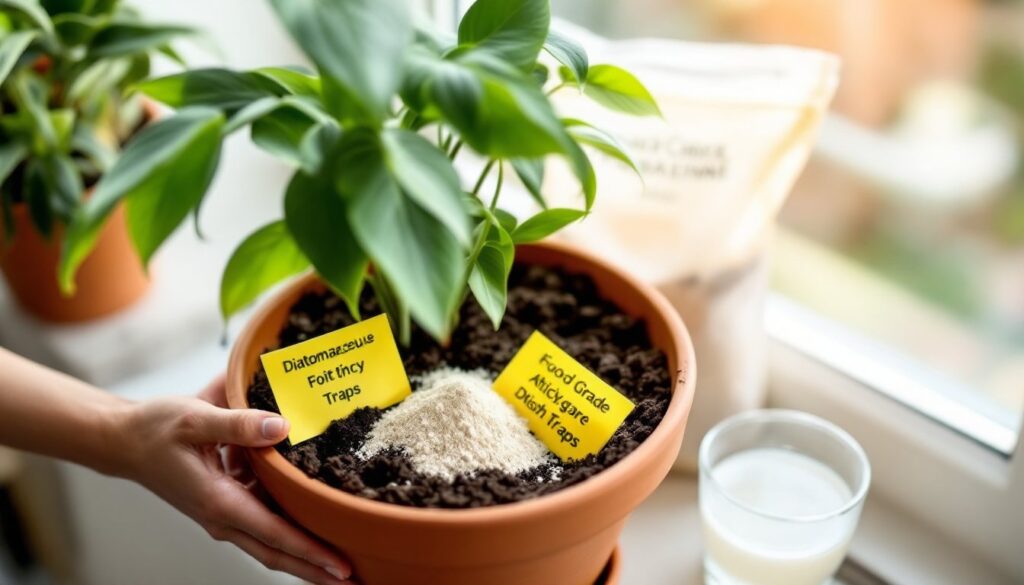
Food-grade diatomaceous earth (DE) is a powder made from fossilized algae. Sprinkle a thin layer (about 1/4 inch) across the soil surface. DE is abrasive to soft-bodied insects like gnat larvae but harmless to you and pets at food-grade strength. It works best when kept dry, so avoid overwatering while using it. Replace every few days as it mixes into wet soil. This method typically takes 1 to 2 weeks to show results but is highly effective.
Cinnamon is less potent but works as a gentle antifungal and mild repellent. Dust the soil surface or mix a teaspoon into the top inch of soil. It won’t kill adults or larvae directly but discourages new eggs from hatching in the upper layers and reduces the fungi gnats feed on. Reapply after watering.
Sand barrier method is simple: lay a thin (1/2 inch) layer of coarse sand or perlite on top of soil. Gnat larvae struggle to burrow through sand, and it dries quickly on the surface, creating a hostile environment. This is purely mechanical and pairs well with other treatments.
Sticky Traps and Apple Cider Vinegar Solutions
Yellow sticky traps catch adult gnats in flight. Place them near the base or suspended at soil level (not above, since gnats don’t fly high). They don’t eliminate the root problem but let you monitor whether populations are dropping. Refresh every 2 to 3 days.
Apple cider vinegar (ACV) traps work on adults. Fill a small cup with equal parts ACV and dish soap, then add a splash of water. The vinegar attracts gnats: the soap breaks the surface tension and they drown. Place one near each affected plant. Refresh daily. This catches some adults but doesn’t target soil-dwelling larvae, so use it alongside soil treatments. Gardenista’s organic fungus gnat protocol outlines similar ACV approaches as part of a comprehensive strategy.
Repot Your Plants and Refresh the Soil
If gnats are severe or other methods aren’t working fast enough, repotting is your nuclear option. Remove the plant from its pot, gently shake off as much old soil as you can, and repot in fresh, new soil. Use a pot of similar size with drainage holes. This removes most larvae and eggs in one shot.
When you repot, inspect the root system. If roots are circling the bottom (root-bound), size up one pot size. If roots look soft, mushy, or smell sour, root rot is present, a sign of chronic overwatering. Trim any soft roots with clean shears and use well-draining potting soil (not garden soil). For tropical plants, a mix of peat moss, perlite, and bark works well. For succulents, use cactus or succulent mix. This is also your chance to upgrade old, compacted soil that’s lost structure and drainage.
Disinfect the old pot if you want to reuse it. Wash with hot soapy water and rinse thoroughly, or soak in a 10% bleach solution for 10 minutes, then rinse well. Don’t put a plant back in contaminated soil or pot right after treatment, you’ll restart the cycle.
Prevent Future Gnat Infestations in Your Home
Prevention is far easier than fighting an outbreak. Once you’ve cleared gnats, keep them gone with these practices.
Water wisely. This bears repeating because it’s the foundation. Stick to your moisture-check habit and adjust seasonally, plants need less water in winter when growth slows and evaporation is lower.
Use high-quality potting soil. Cheap, old, or composted-at-home soil often harbors fungus and organic debris. Fresh commercial potting mixes are sterilized and less likely to introduce pests. Store bags in a cool, dry place: old soil sitting in a damp garage becomes a breeding ground.
Inspect new plants before bringing them indoors. Check soil and foliage for gnats or eggs. Quarantine a new plant in a separate area for a week if you’re unsure. One plant with hidden gnats can infest your whole collection.
Improve air circulation. A small fan on low keeps humidity lower around foliage and helps soil dry faster. Better airflow also discourages fungal issues that gnats feed on. This is especially helpful in bathrooms and kitchens where humidity is naturally high.
Clean up fallen leaves and debris. Dead leaves and organic matter in soil feed fungus and become gnat food. Remove dead foliage promptly and don’t let decomposing plant material sit in pots. If you enjoy the look of tropical house plants or lush indoor greenery, you’ll want to maintain good air circulation and cleanliness around them to keep pests at bay. Country Living also emphasizes plant care fundamentals as part of overall home wellness.