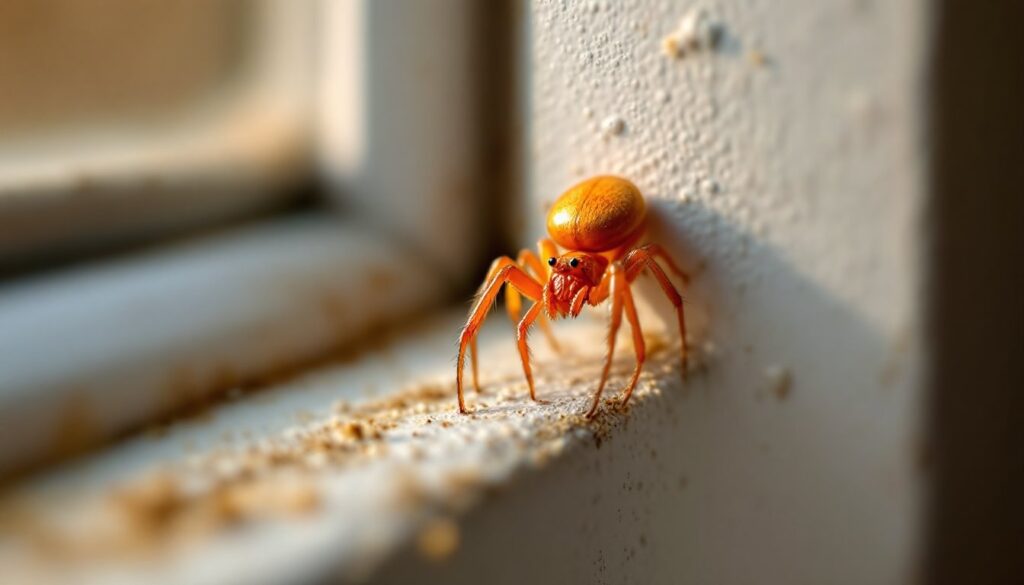
Finding a tiny orange spider crawling across your wall or tucked into a corner can trigger an instant reflex, but before you panic or reach for the bug spray, take a breath. Most tiny orange spiders are harmless, actually beneficial household residents that eat other pests like gnats and mites. Understanding what they are, why they’re in your home, and how to handle them humanely will help you coexist peacefully with these eight-legged neighbors. If they’re becoming a nuisance, there are straightforward prevention and removal strategies that don’t require an exterminator.
Table of Contents
ToggleKey Takeaways
- Most tiny orange spiders in your house are harmless and actually beneficial, as they actively hunt common household pests like gnats, fruit flies, and mites.
- The most common indoor orange spiders include the red house spider and jumping spiders, both of which are docile, non-aggressive, and won’t bite unless severely provoked.
- Tiny orange spiders enter homes accidentally through cracks, gaps, and open doors, then stay because they find steady temperatures, stable humidity, and a reliable food source.
- Seal exterior cracks larger than 1/16 inch, reduce clutter, vacuum regularly, and eliminate food sources like exposed fruit to effectively prevent spider infestations.
- Use humane removal methods such as the capture-and-release technique with a cup and paper, or vacuum and release outdoors immediately, rather than pesticides that harm beneficial insects.
- A small population of tiny orange spiders is normal and preferable to using chemical treatments; seek professional pest control only if you see multiple spiders daily alongside other pest activity.
What Are Tiny Orange Spiders?
Tiny orange spiders are small, colorful arachnids that typically measure between 1/8 and 1/4 inch in body length. Their bright coloring, ranging from pale orange to deep rust, serves as a warning signal to predators that they may taste unpleasant, though they’re not venomous to humans. These spiders belong to several families, with the most common being jumping spiders and orb weavers, though the vibrant hue sometimes comes from dietary factors or natural pigmentation that varies by species.
They’re not aggressive and don’t bite unless severely threatened or handled roughly. Most interactions go unnoticed: you might spot them only when cleaning a corner or adjusting a curtain. Their small size makes them easy to overlook, and their presence is usually a sign that your home is part of a natural ecosystem, something most homeowners prefer over having nothing but dust.
Common Species Found Indoors
The red house spider (Nesticodes rufipes) is one of the most frequently encountered orange or reddish spiders indoors, particularly in warm, undisturbed corners and sheltered areas. This species builds small, messy webs and tolerates human habitation extremely well. They’re entirely harmless and actually quite beneficial since they consume small flying insects.
Another common resident is the jumping spider of the family Salticidae, many of which display orange, red, or reddish-brown coloring. Unlike web-building spiders, jumping spiders actively hunt by sight and can move quickly, which sometimes alarms homeowners. Even though their speed and apparent aggression, they’re docile toward humans and won’t bite unprovoked.
Orb weavers in the genus Araneus or related groups sometimes produce orange-pigmented individuals, though they’re more common outdoors. Occasionally one wanders indoors, especially during fall or winter when seeking shelter. These spiders are slow-moving, non-aggressive, and will retreat rather than defend themselves.
Why They Enter Homes
Tiny orange spiders don’t invade homes the way ants or roaches do. Instead, they drift in accidentally on clothing, packaged goods, or hitchhike through cracks, gaps, and open doors. Once inside, they stay because conditions are favorable: steady temperatures, stable humidity, and a reliable food source of small insects like gnats, fungus flies, or mites.
During late fall and early winter, spiders of all types seek shelter indoors, where it’s warmer and more stable than outdoors. Your home becomes an attractive refuge. If you have old boxes in the basement, cluttered closets, or undisturbed corners behind furniture, these become prime real estate for web-building spiders looking to set up shop.
Cleanliness and tidiness aren’t guarantees against spider visits. Even spotlessly maintained homes can host them if there’s a food source, even a few fruit gnats from a forgotten banana peel in the back of the pantry can attract and sustain a small population. The reality is that spiders are part of cohabiting in a human structure: they appear whether we like it or not.
How to Identify Orange Spiders in Your House
When you spot a small orange spider, the first step is distinguishing it from other household pests. Check its body shape and leg count, all spiders have eight legs attached to a body divided into two segments (the cephalothorax and abdomen). Most tiny orange spiders in homes will have a relatively smooth, rounded abdomen and legs that appear thin and delicate.
Jumping spiders are stockier, with shorter legs and a blunt, flat face when viewed head-on. Their eyes are notably larger and more forward-facing than other spiders, giving them excellent vision for hunting. They often move with sudden, jerky motions when hunting or fleeing.
Web-building species like the red house spider appear more delicate and tend to remain still in their webs, only moving when prey is detected or they’re disturbed. Look for small, irregular webs in corners, around window frames, or in sheltered indoor spaces. The spider will usually be near the center or perimeter of its web, waiting for vibrations from trapped prey.
Color alone isn’t a reliable identifier since many spiders display orange or reddish tones depending on age, diet, and light conditions. Instead, note the overall body shape, web type (if any), size, and behavior. Taking a photo with your phone’s macro mode or a simple magnifying glass can help confirm identification if you’re uncertain about which species you’re dealing with.
Preventative Measures to Keep Them Out
Preventing spiders from entering your home relies on sealing entry points and reducing their food sources. Start by inspecting all exterior cracks, gaps, and crevices around windows, doors, pipes, and siding. Use caulk or weatherstripping to seal gaps larger than 1/16 inch: this step alone blocks a significant portion of accidental spider intrusions.
Inside, reduce clutter in basements, attics, closets, and under beds, spiders love undisturbed areas where they can spin webs unmolested. Dust and vacuum regularly, paying special attention to corners, baseboards, and ceiling edges where webs tend to appear first. This disrupts established webs and removes spider eggs, effectively managing populations without chemicals.
Eliminate their food sources. Store ripe fruits in the refrigerator, seal open pantry items, and fix any kitchen moisture problems that attract small gnats and flies. Check your bathroom and basement for standing water or excess humidity, as these conditions attract the tiny insects spiders feed on.
Several natural spider-repelling methods using household items like peppermint have proven moderately effective in deterring some spider species. Essential oils, diatomaceous earth, and citrus scents may reduce spider visits, though they’re not foolproof. Seal entry points first: natural repellents are a secondary layer of defense.
Keep windows and doors closed or screened, especially during fall and winter when spiders actively seek shelter. If you do spot a web, remove it by wiping with a damp cloth rather than leaving it to anchor future webs. The spider will either leave in search of a better location or rebuild nearby, but regular removal discourages persistence.
Safe and Humane Removal Methods
If a tiny orange spider is sharing your living space and you’d prefer it wasn’t, the easiest approach is the “capture and release” method. Grab a clear glass or plastic cup, gently place it over the spider, slide a piece of paper under the cup to trap the spider inside, and carry it outside to a sheltered spot, under a porch eave, near plants, or in a garden area. Release the paper and let the spider walk free. This takes 30 seconds and harms no one.
For webs, use a broom handle or duster to knock down the web and gently brush the spider outdoors if possible. If the spider drops to the floor and freezes (a defensive response), don’t step on it, give it a moment to recover, then use the cup-and-paper method. Most spiders prefer escape over confrontation and will leave quietly if given the chance.
If you’re uncomfortable handling the spider directly, a vacuum with a hose attachment will suck it up. Immediately after vacuuming, open the vacuum outside or release it through a window. Don’t seal it inside the vacuum bag, where it will starve. Spiders are resilient but not immortal.
Avoid pesticides unless the infestation is truly severe. Chemical sprays kill beneficial spiders and pollinators, disrupt your home’s natural balance, and leave residues. A single spider or even a small population is far less problematic than the effects of broad pesticide use indoors.
When to Seek Professional Help
If you’ve implemented preventative measures, sealed entry points, removed food sources, and you’re still seeing multiple spiders daily across multiple rooms, a professional pest control evaluation may be warranted. This could indicate a larger pest problem (like a fruit fly or gnat infestation) that’s sustaining a spider population, rather than a spider problem itself.
A licensed pest control professional can identify the underlying food source and recommend targeted solutions. Pest control companies listed on platforms like Angi allow homeowners to review service providers, get cost estimates, and understand what treatments are necessary. Many general exterminators will also provide advice on exclusion, sealing gaps and cracks, which is often more cost-effective than chemical treatments.
If you’re seeing spiders alongside other pest activity, unusual droppings, dead insects, or signs of nesting, contact a professional promptly. They’ll diagnose what’s attracting the secondary pest population and help you address the root cause rather than just the spiders.
For most homeowners, though, a few spiders scattered throughout the home are simply part of living in a house. They’re free pest control, and they’re not causing structural damage or health hazards. Coexistence with a modest spider population is far simpler than trying to eliminate them entirely.